

The author of “Don’t Blame The Eater”, David Zinczenko, was once overweight, claiming that by age 15, he had packed 212 pounds of torpid teenage tallow on his once lanky 5-foot-10 frame (Zinczenko 463). His experience being overweight granted him more knowledge on the subject than most people. During his essay, he expands upon that and relates his experience to the perpetually growing obesity dilemma in America, citing fast-food chains as the enemy. Eventually, he leads us to the conclusion that “fast-food companies are marketing to children a product with proven health hazards and no warning labels” (462).
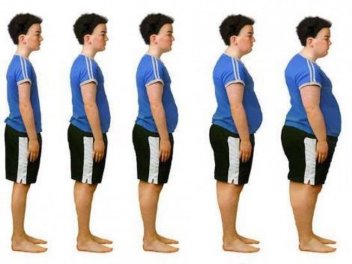
Near the end of his essay he retaliates against bullies by saying “don’t be surprised if you’re the next plaintiff” who is “launching lawsuits against the Fast-food industry” (464). He claims that the industry is making it difficult to understand how many calories  their products have. Many people are victims of difficult to decipher calorie information but there is a more widespread issue than calorie information. There is a severe lack of nutritional information posted on menu’s in general. Typically, in California, the fast-food industry has most of their information located somewhere inside the facility. Someone could argue that this information is widely available but, just as Zinczenko says, there is a major fallacy within how the information is distributed and that prevents consumers from knowing exactly what they are consuming (463).
Zinczenko claims that separation of the calorie information into partitions of the prepared food is the main cause of misinformation (464). However, I believe the main issue is the dispenser of information rather than the lack of information. When most American’s go to fast-food restaurants they use the drive-thru mechanism and do not leave their vehicle. Caloric information might be posted on a drive-thru menu but the remaining nutritional information is not.

In my experience as an Emergency Medical Technician, I have learned that sodium  and carbohydrates have an equal effect on the body as calories do. What we intake is especially important in comparison to how much we intake. By eating foods that are high in sodium or high in the wrong carbohydrates you increase your chance of stroke, heart failure, and obesity. Everyone seems to believe that calories are the main enemy and they are wrong.
It must be made clear that high calorie foods do not harm everyone. Certain athletes, like  Michael Phelps, can take in over 12,000 calories in a single day and still be healthy (Lisi, “Phelp’s Pig Secret”). However, if they take in too much sodium or the wrong carbohydrates, their bodies can suffer. In fast food restaurants, the sodium and carbohydrate amounts are usually only posted on the interior of the restaurant or online, which means people that go through the drive-thru do not typically have this information unless they go out of their way to find it. Since most people use the drive-thru, this has become a large problem.
According to the NPD group, “at fast food hamburger restaurants drive-thru represents 57 percent of visits, compared to 17 percent for carry-out and 27 percent eating on-premise” (“Drive-Thru Windows”). The customers using drive-thru’s have no chance of viewing the  information directly. Their only option is to use the internet, hoping that they can find the right information. However, carry-out and consumers eating on the premises have the option of looking at the information on the wall and could, potentially, regulate their nutritional intake.
Using this statistic, we can make a judgment call that the maximum percentage of consumers that could possibly know what amount of sodium and carbohydrates they are eating is 44 percent. It seems great that almost half of fast-food consumers might know how exactly what they are eating at any fast-food restaurant. Unfortunately, this number is probably lower. Despite placing it where customers are less likely to go, they also make it difficult to find by placing it in awkward or inconvenient locations.
In Carl’s Jr. restaurants, the information is usually next to the entry by the doors. Which  means if consumers of Carl’s Jr. products do not look back to where they entered, they will miss it and be unable to access the information. Thus, most consumers must make their own judgments based on memory regarding how many calories their products have. It is then subject to the same conclusion Zinczenko has already drawn: they are pushing products that are proven health hazards, without a warning label.

If his parents had been aware of McDonald’s nutritional information through their advertising they would have found that a Big Mac is roughly 540 empty calories because it has 46 complex carbohydrates and nearly a gram of sodium (“McDonald’s Nutrition Calculator”). Any reasonably intelligent person, or medically literate person, would tell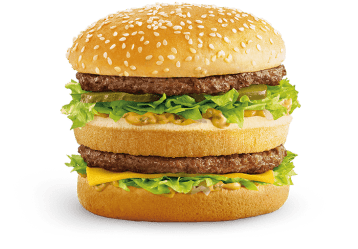 you that a Big Mac is not a healthy meal. However, despite being more accessible than before, nutritional information is still out of the way.
On the McDonald’s website, as I previously referenced, there is the McDonald’s Nutrition Calculator where they list the calories of each meal but even today it’s still, generally, hidden away. Today, and in the past, nutritional information is hidden in an out of the way location, because of this parents are in the dark and willingly submit to a faster and easier medium: the drive-thru. It is unfortunate for Zinczenko because he, like many kids today, turned into a 212-pound teenager because of the complex carbohydrates he unknowingly ingested. We can prevent this from happening to future teenagers by changing the way nutritional information is dispensed.
Despite advancements made through lawsuits against McDonald’s, since Zinczenko’s article was posted in 2002, there is still more to be done. We need to change how the information is dispensed if we want people to eat healthy. If the nutritional information was posted in a more visible location, like on the drive-thru menu’s, there would be less consumers willingly eating their products. Zinczenko’s statement still rings true today: if the fast-food industry properly labeled their food with all the nutritional information, more parents would be aware of it and could better regulate their child’s daily nutritional intake. We could prevent millions of children from becoming obese with simple labeling techniques.

Works Cited
Zinczenko, David. They Say / I Say with Readings: The Moves That Matter in Academic Writing 3rd Edition; Don’t Blame The Eater. W. W. Norton & Company Inc., 2014; New York Times, 2002.
Lisi, Clemente. Phelps’ Pig Secret: He’s Boy Gorge. NYP Holdings Inc., 13 August 2008
http://www.nypost.com/2008/08/13/phelps-pig-secret-hes-boy-gorge/
NPD Group, Inc. Drive-Thru Windows Still Put The Fast In Fast Food Restaurants, Reports NPD. The NPD Group Inc., May 2012.
https://www.npd.com/wps/portal/npd/us/news/press-releases/pr_120530a/
McDonald’s, Corporation. McDonald’s Nutrition Calculator. McDonald’s Corporation, July 2016.
https://www.mcdonalds.com/us/en-us/about-our-food/nutrition-calculator.html
 Professor Ramos' Blog