
Imagine being told that every time you search something up on Google your brain is
changing. Well that is exactly what Nicholas Carr argues in his article “ Is Google Making Us
Stupid.” Carr begins the article by referencing a movie scene in The Space Odyssey in which a
supercomputer is begging the astronaut to stop disconnecting its memory circuits because the machine can feel its memory fading. Carr states that he is not necessarily losing his mind like the supercomputer but rather noticing a change. Carr himself writes “ My mind isn’t going but it is
changing” (313). He noticed the change after his use of the internet increased. He continues to explain that he is no longer able to “immerse” himself in a lengthy book like he used to before. He seems to have trouble staying focused on articles after the first few pages. Carr goes on to explain that he is not the only one who has noticed this issue. Many of his colleagues have experienced the same trouble he has when reading. They seem to have more trouble reading longer pieces of writing as they spend more time on the Internet. A blogger, who majored in Literature, admitted that he has stopped reading altogether. Carr, along with his colleagues blame their lack of concentration on their frequent use of the Internet.
Although Carr includes different anecdotes, he is aware that they do not necessarily prove anything. Which is why he proceeds to include research that further supports his claim. Scholars from University College London have recently discovered that many people tend to bounce from website to website after skimming through the first two pages. The research leads them to believe that “we may well be in the midst of a sea change in the way we read and think”(Carr 316).
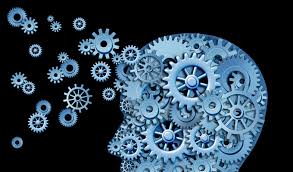
In order to further support his point Carr includes what the professor of neuroscience at George Mason University, James Olds, has to say about the human brain. The professor states that, “The brain has the ability to reprogram itself on the fly, altering its functions” (Carr 319). Clearly the quote supports Carr’s idea that his brain has changed over the years. Carr makes sure to emphasize that the human brain is”plastic.” In order to do so he includes various examples and research, he insists that the human brain can easily change. Even though he states that the
Internet has been beneficial by facilitating the task of looking for research, he believes that it comes at a price. In this case the price would be the change in the way we read and think.
In addition to the research he has mentioned, he uses what Maryanne Wolf, a
developmental psychologist, has to say. In short, Wolf explains that experiments have shown that those who learn how to read ideograms have a different mental circuit than those who learn how to read in a language that utilize an alphabet. Therefore it can be assumed that those who read online will have a different mental circuit than those who read books or any type of print.
Overall, Carr states that the Internet has in someway or form altered his brain and provides highly supportive evidence.
I agree that the internet has changed the way people are thinking and reading because my experience at my high school proves it. Personally, I believe all the anecdotes he included in the article because I have also noticed a change in my brain, specifically in the way I think and read.
For example, when I read the “Is Google Making Us Stupid” article for the first time I
just skimmed through it. And even though I was just simply skimming through it I had trouble staying focused halfway through it. This is not the first time this has happened. In the past I have tried to read news articles about topics that interest me yet I still had trouble concentrating on
what I was reading. At first, I did not give it much thought because growing up I was not a big fan of reading but as my use of the internet increased at school and at home I noticed that I would read differently. When reading an article that was assigned I would just skim through it and the only reason I would finish it was because it was not longer than five pages. Not only did I notice a change when I was reading, but also when I would search up questions on a study
guide. Instead of going back and looking for the answer in my handwritten notes, I would simply type the question in on Google and instantly the answer would appear. I would click on the website that I knew had the least amount of words but had the right answer. And it was not just me who would do it, it would be all my classmates including the smartest students. It was like if we were inventing this new way of reading. A way in which we did not fully immerse ourselves
in the reading as Carr puts it. Carr makes a great point when he says, “ The advantages of having immediate access to such an incredibly rich store of information are many […] but that boon comes at a price”(315). Is being able to make any information we want or need in a matter of seconds worth the price of us not being able to think or read as good as those before us? I believe it is not. We need our brains to change in a positive way not in a way where it is not able to critically think. Sure we don’t have to spend the whole day at the library to find that one thing we need but if we did we would learn so much more. Our knowledge would increase and it would do nothing but benefit us. So in my opinion, I do think Google is making is stupid slowly, but it is. There isn’t research that can prove it just yet but when it does I will not be surprised.
Because I completely agree that the internet is changing our minds, I believe it has done more harm than good. Sure we can communicate with distant family members and search things up faster but that doesn’t make up for the fact that it is easier now to get stalked or even kidnapped. Social media, what most people use daily, makes it so much easier for someone with bad intentions to stalk a person who is simply just tweeting what they ate for dinner today or their thoughts on a topic. Now not only is the internet preventing us from being able to read more than two pages of an article, it is also potentially putting our lives in danger. Internet users need to be more cautious when they are online in order to prevent not being able to finish a book and getting kidnapped.

Works Cited
Carr, Nicholas. “Is Google Making Us Stupid.” They Say, I Say 3rd edition, edited by
Gerald Graff, Cathy Birkenstein, Russel Durst, Norton, W.W & company, Inc., 2015, pp.
313-328.
“ Reasons for the Growing Epidemic” H.E.A.T Watch- Stop Human Exploitation and
Trafficking. http://www.heatwatch.org/human_trafficking/reasons_for_the_growing_epidemic 24
June 2017
 Professor Ramos' Blog